Category: Bullet Journaling

  • The Science of Daily Journaling: Why 5 Minutes Can Change Your Life (Part 2)

    In Part 1, we saw how five minutes of expressive journaling can tame stress, lower cortisol, and even give your immune system a lift. Now, let’s go deeper – into your brain itself. What actually happens when you translate feelings into words? How does the simple act of writing help you manage tough emotions and build lasting resilience?

    Self-Awareness & Emotional Processing: Neurological Insights

    Putting Feelings Into Words – What’s Happening in Your Brain?

    When you name your emotions – whether by journaling or just putting them into words in your mind – you are doing what researchers call “affect labeling.” This is more than just venting on paper. Neuroscience shows it creates measurable changes in how your brain processes emotions.

    Calming the Emotional Alarm

    Deep inside your brain sit a structure called the amygdala (pronounced as “uh-MIG-duh-luh”) – think of them as your emotional “smoke detectors”. When something stressful happens, they light up, signaling fear, worry, or upset. But something amazing happens when you label your feelings in writing. MRI (Magnetic Resonance Imaging) scans show that naming your emotions (“This is anxiety”; “I feel sad right now”) actually reduces activity in the amygdala. In plain words: writing about your feelings helps dial down your brain’s alarm system, making intense emotions feel more manageable.

    Boosting Your Brain’s Self-Control Hub

    At the same time, another region – the ventrolateral prefrontal cortex (vlPFC), just behind your forehead – becomes more active. This part acts like your brain’s steady hand, helping you understand, regulate, and work through emotions instead of being overwhelmed by them. The more you name and explore your feelings, the better this “regulation muscle” gets at guiding you through life’s ups and downs. 1 2 3

    Why Does This Matter?

    Research finds that people who regularly practice reflective journaling – especially the kind that involves naming and exploring emotions – build up these neurobiological “tools”. Over time, this practice leads to:

    • Greater self-awareness: You spot and make sense of emotional patterns rather than being blindsided by them.
    • Improved emotion regulation: You recover from setbacks faster and are less likely to be caught in spirals of anxiety, frustration, or rumination.
    • Lasting resilience: These positive changes in brain activity are linked to improved mood, physical health, and overall life satisfaction months down the line.

    “When you put your feelings into words, you’re literally shifting brain activity in ways that help you feel better and cope better.” (Putting feelings into words: affect labeling disrupts amygdala activity, PubMed)

    What the Studies Show

    One large MRI study found that people who practiced affect labeling while journaling saw reduced amygdala activation and greater vlPFC engagement, both while writing and in their daily lives afterward.

    Astonishingly, these brain changes predicted improvements in depression, anxiety, physical health, and life satisfaction three months later.

    In summary: The act of turning emotions into words is more than a feel-good practice. It’s a science backed way to build self-insight, calm your “worry circuits,” and strengthen your mind’s most resilient traits.

    Final Thoughts: Start Changing Your Life – One Journal Entry at a Time

    Science makes it clear: just a few minutes of reflective journaling each day can do wonders for your mind and body. By putting your feelings into words, you’re not only easing stress today – you are literally rewiring your brain for greater resilience and emotional strength tomorrow. Becoming more self-aware, learning to handle emotions, and even enjoying a stronger immune system – all of these benefits are within reach.

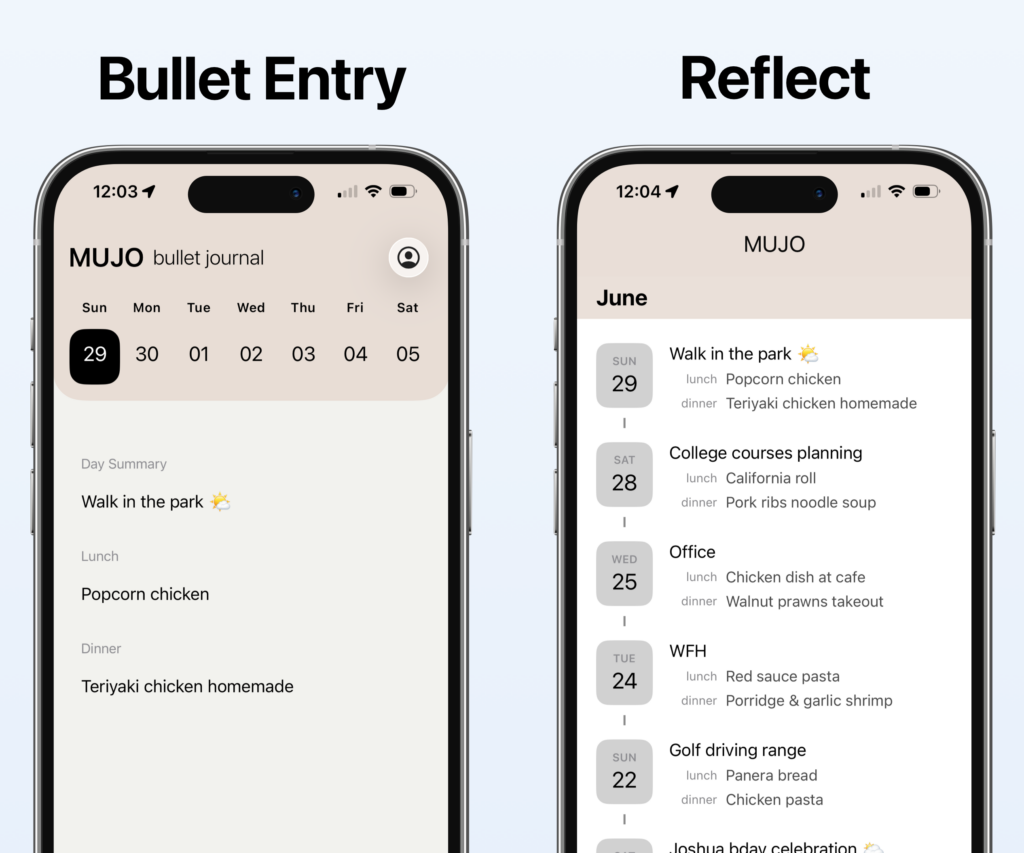
    But as with any life-changing habit, the hardest step is often the first one – and sticking with it consistently. Here, I recommend MUJO, a daily journaling app.

    Why Try MUJO, a daily journaling app?

    MUJO is designed to be the simplest, friendliest way to make daily journaling a part of your life. You don’t need to worry about where to start or what to write – MUJO offers gentle prompts, easy reminders, and a clear, clutter-free space just for you.

    • Looking to feel calmer and more in control?
      MUJO helps you build a routine that lowers anxiety and clears away mental clutter.
    • Want to get to know yourself better, set meaningful goals, and track how you are changing day by day?
      MUJO’s guided reflections and emotion tracking keep you focused on growth.
    • Concerned about privacy?
      Every journal entry is encrypted and stays completely private, so you can freely capture your thoughts and emotions.
    • Need a little nudge?
      Get daily reminders and streak tracking so you keep up the momentum

    The act of journaling – even for five minutes – has been proven to support mental health, boost well-being, and sharpen focus.

    Start your journey to a healthier, more mindful you – one journal entry at a time. Get MUJO, daily journaling app now

    Reference

    1. Putting Feelings Into Words – Affect Labeling Disrupts Amygdala Activity in Response to Affective Stimuli (Lieberman et al., UCLA) ↩︎
    2. The common and disctinct neural bases of affect labeling and reappraisal in healthy adults (Burklund et al., PMC) ↩︎
    3. Neural activity during affect labeling predicts expressive writing effects on well-being: GLM and SVM approaches (Memarian et al., PMC) ↩︎
  • The Science of Daily Journaling: Why 5 Minutes Can Change Your Life (Part 1)

    In a world filled with consistent notifications, packed schedules, and endless to-do lists, it’s easy to feel overwhelmed. But what if five minutes a day could improve your mental health, reduce stress, and help you understand yourself better? Research suggests that daily journaling – a practice as simple as writing down your thoughts – has powerful, science-backed benefits.

    Stress Reduction Backed by Psychology

    Expressive Writing Benefits

    Studies in psychology show that expressive writing helps reduce stress and anxiety. When you take time to write about your feelings, your brain processes emotions differently. Instead of circling around the same worries, journaling provides structure, helping you organize thoughts and let go of mental clutter.

    Expressive writing is a form of journaling where you freely explore your emotions, and it has been shown to lower stress and improve physical health. Research in Psychosomatic Medicine found that writing about emotional experiences over several days can boost immune function, reduce blood pressure, and decrease visits to healthcare providers. 1 2

    Cortisol Reduction

    Research in Journal of Medical Internet Research (JMIR) Mental Health and other journals show regular journaling for 15 minutes three days a week can reduce cortisol (stress hormone) levels by 19% in one month, linking journaling to direct physiological stress reduction. 3 4

    Gratitude Journaling

    Gratitude journaling also delivers benefits. People who regularly write down what they are thankful for feel more optimistic and report better physical and psychological health compared with those focusing on hassles or neutral events.

    Studies confirm gratitude writing increases feelings of optimism and physical and psychological health, with many analyses showing benefits for anxiety, depression, mood, and health markers. 5 6 7

    Takeaway: A few minutes of journaling a day can act like a pressure valve for your mind – helping you manage stress before it builds up.

    How to Get Started: Your 5-Minute Journaling Practice

    Getting started can be simple. You can consider the following.

    1. Choose a consistent time: morning to set intentions or evening to reflect.
    2. Use simple prompts:
      “What made me feel good today?”
      “What am I grateful for right now?”
      “What’s on my mind that I need to acknowledge?”
    3. Keep it short and honest – write for yourself, not for perfection.
    4. Leverage a tool or app like MUJO, a bullet journaling app to automate prompts, reminders, and tracking.

    Final Thoughts

    Evidence tells us that even a small daily habit – like five minutes of journaling – can make a meaningful difference. It supports better stress regulation, self-awareness, emotional resiliency, and long-term wellness.

    References

    1. Emotional and physical health benefits of expressive writing (Cambridge University Press) ↩︎
    2. Effects of Expressive Writing on Psychological and Physical Health (Niles et al., NIH PMC) ↩︎
    3. Writing About Past Failures Attenuates Cortisol Responses (DiMenichi et al., NIH PMC) ↩︎
    4. The Power of Journaling for Managing Stress and Anxiety ↩︎
    5. A Brief Gratitude Writing Intervention Decreased Stress and Negative Affect During the COVID-19 Pandemic (Fekete, Deichert, NIH PMC) ↩︎
    6. Practicing Gratitude for Better Health and Well-Being (University of Utah Health) ↩︎
    7. The effects of gratitude interventions: a systematic review and meta-analysis (Diniz et al., NIH PMC) ↩︎

  • Benefits of Bullet Journaling Daily

    Why a few minutes a day with your journal can change everything.

    In a world that constantly demands our attention, taking time to pause, reflect, and refocus can feel like a luxury. But what if just 5 minutes a day could help you feel more grounded, more productive, and more in control of your thoughts? That’s where bullet journaling comes in.

    Whether you are a self-reflection newbie or a planner addict, daily bullet journaling can unlock big benefits with minimal effort.

    1. Gain Mental Clarity

      Bullet journaling gives you a tranquil space to offload thoughts, tasks, and emotions. Instead of juggling mental to-dos or replaying stress loops, you create a mind dump zone where everything has a place.

      Why it works:
      Writing things down reduces cognitive load, helps you think clearly, and makes problem-solving easier.

    2. Stay Focused and Productive

      By quickly jotting down daily goals, priorities, and tasks, you start the day with purpose. No more scattered energy or forgotten action items.

    3. Track Habits and Progress

      Want to drink more water, meditate, or go to bed earlier? Bullet journals make it easy to build a visual habit tracker. Checking off boxes daily gives you motivation and instant feedback.

    4. Cultivate Mindfullness and Gratitude

      Even just a one-line reflection or gratitude entry a the end of the day can shift your mindset. Bullet journaling helps you stay present, appreciate small wins, and reconnect with what matters.

      Example:
      “Today I am grateful for the quick walk after lunch.”

    5. Reduce Anxiety and Stress

      When thoughts are spiraling, bullet journaling gives structure to chaos. A simple brain-dump, mood log, or a feelings tracker can be powerful for emotional awareness.

      It’s your safe space – judgement-free, private, and always there

    6. Customize for Your Life

      There are no rules! Your bullet journal can be minimal or creative. It can include:
      Mood trackers
      Meal logs
      Journal prompts
      Daily affirmations
      Sketches and doodles

      Start simple. Build it your way.

    Final Thoughts: Small Habit, Big Impact

    Bullet journaling isn’t just about staying organized – It’s a daily act of self-care. With a few minutes, you are reclaiming your time, your focus, and your mental space.

    If you are ready to build a consistent journaling habit, check out MUJO – the daily journaling app that makes it easy and enjoyable. MUJO helps you stay on track with daily prompts, reflections, and personal insights.